Wednesday, July 18, 2012

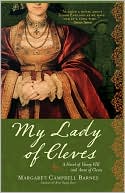
'My Lady of Cleves' - Book Review


I’ve read ‘My Lady of Cleves’ last year and I enjoyed this book a lot. Maybe it’s because the book shows a lot more of who Anne of Cleves was instead of the widely known ‘Flanders Mare’ and the ugly, stinky, badly dressed German woman that Henry VIII disliked.
Anne of Cleves was dependent on her brother William and their mother. She would help her brother William during state affairs and she had a very caring nature by helping the less fortunate. Even their mother thought it would be better for the youngest daughter, Amelia, to go to England since she couldn’t spare Anne. Despite Anne having pockmarks, Hans painted a beautiful miniature of Anne (the artist in him seeing a person’s soul).  There are references of her not speaking good English and that she is simple minded, which is a common theme in other historical fiction novels that I’ve read.
In this book, you also see a different side of Henry VIII. In the beginning, he wasn’t too keen on getting married a fourth time, especially with a foreigner. He’s pretty content to just be a widower. He’s a doting, concerned dad when it comes to Prince Edward. Then there’s the romantic side of Henry VIII when he looks at Anne’s miniature. He also missed his younger sister, Mary Tudor, which would lead him wanting a sister-like figure. Throughout the book, Charles Brandon tells Anne of Cleves that there is a different side of Henry VIII that is rarely seen.
The theme that remains between Henry VIII and Anne of Cleves was that meeting in Rochester. If only she was told beforehand that Henry VIII loved to dress in costumes, maybe that meeting wouldn’t have been so disastrous.  In Margaret Campbell Barnes’s retelling of that disastrous meeting, Anne of Cleves was in disarray thanks to the works of the Duchess of Norfolk (Katherine Howard’s grandmother) and Lady Rochfort (George Boleyn’s wife). I guess it makes the scene set that the Howard clan wanted to get rid of the woman that Cromwell wanted in order to get another Howard girl on the throne.
Anne of Cleves tried to go through every little detail in her head after that disastrous meeting in Rochester. It must have been a surprise when Archbishop Cranmer visited her at Hampton to convince her to keep the king’s interest. You couldn’t really blame the poor woman. She was unable to come up with clever responses because either of lack of English words or the English words is lost at the tip of her tongue. She truly tried her hardest in a whole new country. Then the humiliating scene with King Henry VIII coming to Hampton with Katherine Howard in tow, just makes things worse for Anne.
There were some good points in the marriage. When Anne of Cleves finally meets little prince Edward, she was able to calm his temper so that he was able to tell what was wrong and be able to play with his father and siblings. Anne has that gentle, motherly nature, which she shows Henry VIII and maybe in that brief moment, they acted like a married couple. Still, Henry VIII still wanted Katherine Howard and eventually the divorce proceedings will happen.
Despite the humiliating fact that Henry VIII wanted to divorce her and even had a statement during a meeting with his council, Anne of Cleves found it would be better for her to be the much beloved sister of Henry VIII. Anything is better than having your head cut off. Technically, Anne of Cleves isn’t totally free because she is unable to go home or to remarry. Still, she would be given properties, allowance and have the children (Mary, Elizabeth and Edward) to visit her.
During her time as sister to the King, she is beloved by many people. On one side, there are the people in the Protestant party would still believe her to be their rightful queen. On the other, there are Henry VIII’s friends who are now more appreciated of Anne. It was an interesting sight to see Henry VIII come to her house at Richmond and finally see what an extraordinary person that Anne was. He might have wondered why he never saw this before when they were married. Henry VIII would eventually open up to Anne as if she was really his natural sister.
 It’s also funny how she would get back at him for being such a bad person to humiliate her. For example, when she was ill and stayed in her bed, there were rumors spreading that she had born the king a son. She thought that it would be fun to just stay in bed to make Henry VIII guessing.
Towards the end, Anne has a better understanding of Henry VIII and would know how to handle him. During Queen Katherine Howard’s downfall, there was a possibility of Anne becoming queen once again. It was tempting and they had a better relationship now but watching little Katherine Howard making her way to the Tower, Anne knew that it wasn’t worth becoming queen again. I believe that she was right to think that way. Even so, she didn’t much care for Katherine Parr to be queen either, mainly because she can do the household things like Anne can do but also, Katherine Parr will have Henry VIII’s children.
In Margaret Campbell Barnes’s story, Hans Holbien would love Anne and vice versa but of course that can go nowhere. There are times in Anne’s story that she wished she could have been a wanton woman before marrying Henry VIII. Also, her dreams of having children would never be fulfilled. Now that she had her own estates, allowances as sister of the king, the children of the orphanages, she is a well off lady and the children of the orphanages are her babies. The transformation in Anne of Cleves is remarkable.
She would watch friends come and go. She would love her life out in the country and that is probably the best place for Anne of Cleves. At the very end of her story, she would help the great King Henry VIII come to terms with his pending death. I love the ending where she thought that he was making up for having called her a Flanders Mare.
I thoroughly enjoyed reading this book for the second time. Anne of Cleves would have been someone I would get along with and open up to, knowing that she would keep any secret that I tell her. If Anne of Cleves was truly the way that Margaret Campbell Barnes made her in this story, then I would agree with Cromwell when he said that it was England’s lost to lose such a wonderful woman.

Sunday, July 1, 2012

'At The King's Pleasure' - Book Review

‘At the King’s Pleasure’ is the fourth book in Kate Emerson’s Secrets of the Tudor Court series. I’ve read the previously three books and I’ve enjoyed reading each one. Kate Emerson focuses on the different women who are at the Tudor court so you are introduced into their personal stories as well as their life in the Tudor court. I’m also so absorbed in the book, which makes Kate Emerson a wonderful story teller for historical fiction. Also included in back of the novel are the real people’s mini biographies.
The main character in Kate Emerson’s latest novel is Lady Anne Stafford. If you are not quite sure who she was, Anne Stafford was the woman that Henry VIII kind of had his eye on as a possible mistress but once her brother learned about a possible affair, she was sent to the nunnery right away. Other than that little tidbit, I didn’t know too much about Lady Anne Stafford. Her story takes place during the early part of King Henry VIII’s reign when he was married to Queen Katherine of Aragon to a few years after the Field of Cloth of Gold.
Even though this is Lady Anne Stafford’s story, Will Compton, George Hastings and the Duke of Buckingham are frequently in the novel.
·         Will Compton was one of Henry VIII’s closest friends and was elevated as Groom of the Stool as Henry VIII came on the throne. It was quite possible that there was something going on between Will and Anne as the novel suggests. Still, even if he wanted to marry her, he was below her station (Anne was the daughter of a duke and he was a commoner not yet knighted).
·         George Hastings was Anne’s second husband. It would seem that they had a mutual attraction to one another as well. Jealousy and mistrust would later plague his relationship with Anne Stafford but through time, they would find love. It would seem that they had a good marriage overall.
·         Edward, Duke of Buckingham was Anne’s brother. He’s the hot headed brother who thinks he’s a good candidate to rule if Henry VIII doesn’t have any male issues. He is also the highest ranking duke in Henry VIII’s court and dislikes Henry VIII’s friends (ex. Charles Brandon and Will Compton). The Duke of Buckingham waits and schemes in the book and since I don’t like him, I’m hoping for a bad ending for him.
It’s basically a love triangle between Anne, George and Will. Will seems to be hopelessly in love with Anne but the two do enjoy the flirting that they exhibit at court. George, on the other hand, dislikes the whole display especially when he knows Will Compton’s nature.
Things heat up for Anne Stafford during the time of Queen Katherine’s second pregnancy. King Henry VIII thinks it is wise to leave pleasures aside with the queen. In doing so, he decides to have a mistress and he sets his eyes on Anne Stafford. Will Compton comes to Lady Anne’s room and she is appalled by the idea. Remember, Will Compton loved her and equally appalled at the idea of her being a royal mistress. Even though it looked like Lady Anne would be able to take care of how to handle the situation, her brother and their sister Elizabeth Fitzwalter supposedly ‘catches’ her with another man. Okay, maybe it was partly her fault since she was very flirtatious (but that’s the way things were at court) and Will Compton happened to be in her room. Lady Anne would get a rude awakening when her own husband does not come to her defense.  At dawn, she would be spirited away to a convent about 60 miles away.
During the time that Anne Stafford would stay at Littlemore priory, life is much more restricted, must follow the rules of the priory and the prioress was a very strict woman. During Anne’s stay, she befriends one of the nuns and learns a little secret of the prioress (Katherine Wells), which she will use later on in the story. After a month or so at Littlemore, George Hastings comes to bring back his wife to Ashby de la Zouch castle under conditions. This would be the place where Lady Anne will remain for the next five years before her being allowed to go back to court. During this time, they grow back into their mutual attraction to one another and Anne hopes that George will trust her again. Not like he had any reason to doubt in the beginning.
Even though Anne would eventually return to court, the love triangle continues: Will Compton being everywhere and in the same situation as Anne while George watches their actions like a hawk. Eventually, George will have to forgive Anne but he is still very wary about Will Compton. You would too with all the reasons he says about Will Compton. The life at court continues to go on especially now that Thomas Worsley gains more power and enemies. The Duke of Buckingham would listen to a prophet from Hinton and believing that Henry VIII would have no heirs from his body and that the Duke of Buckingham would be king. Well, we all know how wrong that prophet was! Still, the situation that the Duke of Buckingham would be in is categorized as high treason.
In the later chapters, you are given the scenes of the Field of Cloth of Gold between King Francis I of France and King Henry VIII of England. It must have been a spectacular affair with the tournaments and the many people on both sides and all the grandeur. Kate Emerson describes the Field of Cloth of Gold that made me feel like I was actually there with Anne Stafford. Still, Anne can hardly be excited during the festivities because of Lady Compton (Will’s wife) stirring trouble between Anne, George and Will.
Anne would learn the value of family once she learned that her brother is in serious trouble. She even tried to get Will Compton to help since he is close to King Henry VIII but he can’t help her.
Anne Stafford’s story is full of love, trust, betrayal and family value while living at the Tudor court. She must have been a beautiful wonderful woman, who was actually lucky to have a good marriage (despite George not trusting her for sometime). Kate Emerson gave me a different look at Anne Stafford because I’ve read other historical fiction novels that depict Anne Stafford as an adulterous wife. I’ve enjoyed reading ‘At the King’s Pleasure’ and I hope that this is enough to get you to read it too.

Sunday, June 17, 2012

'Rival to the Queen' - Book Review


What I do know about Lettice Knollys was that she had a few marriages and one was with Robert Dudley, Earl of Leicester. She had similar features like a younger Queen Elizabeth I so she could have been Elizabeth’s double gagger.  She was the daughter of Catherine Knollys, daughter of Mary Boleyn so Elizabeth and Letticia were actually cousins. She was banned from court when Elizabeth found out that she married Elizabeth’s favorite. She also had a wantonness behavior that attracted the men at court (other than her beauty).
When I noticed that Carolly Erickson wrote a historical fiction about Lettice, I couldn’t help ordering the book. In my previous blog, I read ‘I, Elizabeth’ so I guess it was fitting that my next book for the Tudor challenge would be about Lettice Knollys.
I do wonder if Lettice thought herself to be part of the royal family. In the early chapter, Lettice mentions that her mother told her that Catherine may have been rumored to be a child of King Henry VIII. It was definitely rumored that Catherine Carey could have been King Henry VIII’s natural daughter. Too bad we can’t do DNA testing to put that rumor to rest.
Some of the early chapters place Lettice in Flanders during the reign of Queen Mary I. You don’t have too many chapters specifically during this part of her life and you’ll be back in Tudor England when Queen Elizabeth I is on the throne. In this book, it seems that Catherine Knollys and Queen Elizabeth I were not exactly friends while in other books I’ve read, it seems that they were. True to Elizabeth’s character, Carolly Erickson displays that famous Tudor temper at the maids of honor. It was interesting to read from Lettice’s point of view of being a maid of honor for Elizabeth. I don’t think I could be able to handle the abuse that Elizabeth would bring when she’s upset. Lettice’s description of Elizabeth is more of a woman with a temper, changes her mind too often and in love with Robert Dudley. After reading ‘I, Elizabeth’, I have a different view of Elizabeth as a lady and a Queen.
In the early days, she admires Robert Dudley especially when she was being courted by her first husband, Walter Devereux. Walter seemed more like a bore compared to Robert any day. Her admiring Robert would eventually become friends in the book.
There are some things that seem farfetched to me such as the story about Elizabeth not really having monthly bleedings and only using other people’s blood to disguise her barrenness. Especially during this timeframe, Elizabeth would have been in her late twenties. Still, with Elizabeth refusing to marry anyone, it would be an interesting rumor. Another farfetched scene was Elizabeth wanting bed curtains that once belonged to Amy Robsart to decorate Elizabeth’s room. Again, an interesting rumor to spread since it was widely known that Elizabeth favored Robert and there were already rumors that he would marry the queen or already has married Elizabeth.
An interesting view that I’ve never read so far is about the inquest about the sudden death of Amy Robsart. Lettice tells about the witness’s accounts up to that deadly afternoon from the doctor to Amy’s servant Pirto.  It gives the reader an idea of the inquest and how they came to their conclusion. Also her account during the time Elizabeth was feared to die from the pox and leaving England in the hands of Robert Dudley.  As to him having a priest to marry them at her so called death bed seems farfetched as well but a good reason for her to claim him as Lord Protector if she passed away. It’s these types of historical fiction I like to read when it’s in another person’s view point at court, even though the author places the character in their story when historically, that character may not have been there. Through all these places that the author places Lettice, Lettice continues to grow fond of Robert Dudley while despising Walter Devereux. There is also her account of the bear baiting, which was very barbaric. However for people that loved blood sports back in those days, this was their entertainment.
Carolly Erickson gives the impression that Lettice wasn’t as forward as other historical fiction books depict her. In her version, it’s only through a despised younger sister that her reputation is ruined. Even at the Tudor court, rumors are very powerful tools.
During her marriage, Lettice proved to be fertile (even though it was only daughters early in their marriage) and learned how to manage her husband’s estates. However, eventually Lord Robert would take notice of Lettice even if it was just to make the queen jealous. Still, this short love affair was wonderful for Lettice since her marriage to Walter made her very unhappy and her secret dreams revolved around Robert Dudley.  Undoubtedly, she would love Robert but there is always that nagging feeling that there was more to him then she already knew. Eventually, Lettice will bring Robert Devereux into the world. Remember his name later because he will become one of Elizabeth’s favorite in the later years of her reign.
The passage of time goes quickly in this book. One minute, the queen is in her late twenties and the next, the queen is in her forties. By the time that Elizabeth is nearing forty, Lettice and Robert have grown fond of one another, which as Lettice saw it, loved one another. It’s interesting to see a different side of Robert like how he referred Elizabeth as a ‘sour, hateful old thing’ to Lettice. You would think that Robert Dudley truly loved the queen since historically those two are linked.
After her first husband died, not sure of how much time had passed before Robert and Lettice were married. I assumed it’s after a year or two of mourning since that was the tradition. It’s at this time that Lettice acknowledges that she was Elizabeth’s rival and begins her banishment from Elizabeth’s court. Lettice will get the nickname She-Wolf. Still, Lettice doesn’t cower at Elizabeth’s fury because by this time she understood why Elizabeth hated her.
It seems that Lettice had a good marriage with Robert Dudley (much to my surprise). By this time, Lettice is in her forties and has given Robert the son he looked for. Robert no longer in disgrace is back at court with Queen Elizabeth I while Lettice is still out in the country. Still, Elizabeth would make sure that Robert was still at her side but Lettice, being a good wife, tried not to complain. Despite his love for his queen, it seemed like Robert was actually a very devoted husband (another surprise since he wasn’t as devoted with his first wife Amy Robsart).
This is the second book that I encountered None Such Palace. Not enough description as in ‘I, Elizabeth’ but just a brief mention. I was grief stricken at the lost of Lettice’s son with Robert Dudley who was only three years old. As a mother, I don’t know how I would be able to go on if I lost my little guy. Dashed are Robert’s dreams of having a son to carry the Dudley name.
The later chapters told about Elizabeth’s later years of her reign with the war against Spain, Robert Dudley in the Dutch provinces and famine. You are also introduced to Christopher Blount, who in time would be Lettice’s third and last husband. What a scandal that might have been since Chris was a much younger husband. Her son, Robert Devereux, is an interesting character and a big upstart. He seemed to truly believe as Elizabeth’s favorite and ‘royalty’ (thanks to Lettice’s blood), he was the ideal choice to rule England. As to why Elizabeth favored him, only she would know. Lettice was right to worry about her son. Thanks to her son, Lettice returns to court as Mother of the Maids but an underlying reason from Elizabeth is the true reason Lettice is able to return to court.
The story ends when Lettice says good-bye to her only son, Robert Devereux. At the epilogue, Lettice is in her nineties. She had an extraordinary life, full of dreams, love and heartache. Thanks to Carolly Erickson, I have a different view of Lettice Knollys. To me, she was just an ordinary girl (possibly had royal blood), trying to make her way at the Tudor court. Lettice was a good daughter to her parents Francis and Catherine Knollys even though she was overly criticized by her father. Despite rumors of her wantonness, she married first by her father’s match then married for love twice. She was just as hot headed as her cousin Elizabeth but she was also cautious. Lettice is a much more relatable character than what other historical fiction books portray her.

Monday, June 11, 2012

'I, Elizabeth' - Book Review


So, it's been awhile since I've blogged. Recently, I just finished 'I, Elizabeth' by Rosalind Miles. I realize that this book has been out for awhile now so you've may have read it already. If you haven't, hope my review of the book would entice you to read it.

I don’t have many books that looked into the life of Queen Elizabeth I. I have Philippa Gregory’s ‘The Virgin Queen’ and Barbara Kyle’s ‘The Queen’s Captive’ that have portions of Elizabeth’s life but what I wanted was a book that tells her side of the story that I knew from other historical fiction. I bought ‘I, Elizabeth’ sometime ago and finally I have a chance to read. I admit it took me longer than normal to finish the book but I’m very glad that I finished it. As a historical fiction novel, it gave me a better understand of Queen Elizabeth I as a person.
The book is in five chapters, each depicting the different stages of Elizabeth’s life. 
·         Book of One (Bastard) –Elizabeth focuses on her life as a young girl during the time of her father’s marriage to his last wife, Queen Katherine Parr. However, the word ‘bastard’ seems to follow her around, even when she was not yet conceived. At a young age, she learns who her enemies and friends are, especially with danger looming around between those for the Old Faith (Catholics) and the New Faith (Protestants).  As a smart girl, she comes to realize problems rather quickly. Through all this, she must learn to be on guard – her famous cautious nature had to begin somewhere. She notes the changes in her father during this marriage, which is a good description of the drastic change from his golden boy years to the ill-tempered old man. Ever wonder how she met her future advisor William Cecil? I’ve always wondered and in this novel, he gives her the truth about her mother, Anne Boleyn’s death.
·         Book of Two (Virgin) – This chapter is fairly long so it took me some time to get through it. This includes King Edward VI reign, a little of Queen Jane’s 9 -day reign, Queen Mary I’s reign and when Elizabeth was proclaimed Queen Elizabeth. Questions like, what went through Elizabeth’s mind when Thomas Seymour pursued her and did she really disliked her cousin Jane Grey, came through my head as I was reading. I’ve read ‘Innocent Traitor’ and their relationship seems quite different.  You see King Edward VI’s transformation from the boy that Elizabeth knew to a man who is overzealous about the Protestant religion. Despite that, Elizabeth’s happy moment when she was queen all but name since their sister Mary wasn’t allowed at court. Her happy time becomes shattered once Edward dies and Mary takes the throne. Her fears returning in Mary’s reign as being proclaimed as a Wyatt co-conspirator and being in the Tower itself. You can almost see the condition Elizabeth experienced when you went to the Tower. Her loss of people she knew to the burnings. I was kind of disappointed when there wasn’t too much about her relationship with King Philip other than the tool of using his lust for her own needs. I have read other books that mention this so I’m not overly disappointed. Towards the end of the chapter, you feel Elizabeth’s anticipation and waiting for the passing of Mary. You also hear the triumph in her voice when she at last was finally Queen of England.
·         Book of Three (Queen) – Elizabeth’s big day has finally come. It was nice to ‘see through’ Elizabeth’s eyes during her coronation day. However all good things must come to an end. The trouble country that Mary left behind and the ever present marriage issue would plague Elizabeth. Along with her headache is the issue of Mary, Queen of Scots. Her joy this time was when Robert Dudley proclaims his love for her. Sometimes it makes me wonder if he truly loved Elizabeth or it was all a ploy to gain more power. Maybe it was a mixture of both. Oh young love between Robert and Elizabeth yet they could not truly be lovers. Still, Amy Robsart still lingered in the background. Her love triangle would be known in the kingdom and abroad while she waited for poor Amy to die from her malady.  However, when the news of Amy’s tragic death reaches Elizabeth’s ears, Elizabeth can only wonder ‘who done it?”. Plaguing her in this chapter like a steel drum after Amy’s untimely death was marriage and an heir but in her heart, all it could say was ‘Robin’. I also did wonder if Elizabeth and Robert were more than lovers and she may not have been a virgin as she claimed during her reign. A scene suggests it when she had to choose between England and Robert. As a hopeless romantic, I would want them together but like Elizabeth would ponder, did she want to lose what she had as England’s Queen to her husband. After what she has witness with her sister Mary, why would she give it up.
·         Book of Fourth (Bellona) – Rightfully named, this is when Elizabeth becomes the Queen of War. The war against her cousin, Mary Queen of Scots, war against the Catholics plotting to take her life to put Mary Queen of Scots on the English throne and ultimately, war with her brother-in-law King Philip of Spain. Despite the ongoing war in the surrounding countries, Elizabeth breaks down when she learns of Robert’s marriage to Lettice Knollys. Poor Elizabeth, to endure such heartache. But like a true Tudor, she made sure that Lettice never stepped foot in her court again. I still believe he still loved Elizabeth till his dying breath. Wish I could read that precious letter he gave her before he died. Elizabeth now in her forties is still playing the marriage game only to lose her one chance of marriage and bear a child with the young French heir.  What a good actress she was to pretend she knew nothing about her ships taking King Philip’s gold.  That was one way to get on his bad side yet enrich her coffers. Here in this chapter comes Sir Frances Drake (the sea-faring captain), Sir Walter Raleigh (one of her favorites) and Thomas Walsingham (spy master). As Elizabeth reaches fifty, the more makeup she must use to hide her imperfections and love it when young courtiers profess their love just play with her vanity. Along with raging wars and trying to keep the peace, Elizabeth must go through death threats upon her life.  The most notable plot is from the Babington papers, which would incriminate Mary Queen of Scots. Once that war was over, here comes the Spanish Armada knocking at her door. I couldn’t stop reading during this time of Elizabeth’s reign. Even though I know she triumphed, just reading her experience makes her fear and triumph real.
·         Book of Fifth and Last (Gloriana) – The final chapter of Elizabeth’s reign and life. A kingdom to govern in her old age yet many of her old courtiers start to pass on. Elizabeth’s court is now full of young blood and the question rises of who will be truthful to her. Her new love in her old age would be Robert Devereux, Earl of Sussex. If it sounds like a repeat of her attitude toward Robert Dudley, it probably is. But what she couldn’t do with Robert, she did with Devereux by sending him to the Tower when she learned of his secret marriage. Despite the Earl of Sussex taking advantage of her love, she always forgave him until it was a time where she could no longer forgive. You would think things would get better for Elizabeth with peace for England. During the end of her reign, there were bad harvests, proclamations against her church and war with Ireland. You are also introduced to Shakespeare in this final chapter. I’ve read somewhere that Elizabeth would nurse her beloved William Cecil during his last days and cried when he passed on but in this book, she was just informed of his passing, which is disappointing. In this chapter, this is the first I’ve read about None Such palace, which King Henry VIII built. I’ve heard about a painting recently but never seen it mentioned before. It must have been a wonderful palace. Here’s an article about a replica of this magnificent palace: http://www.dailymail.co.uk/news/article-2050919/Henry-VIIIs-lost-Nonsuch-Palace-recreated-300-years-destroyed.html. When Elizabeth feared for her life from enemies abroad, she now has to fear for her throne and life by one of her own subjects.
Overall, even though this is historical fiction, I enjoyed reading ‘I, Elizabeth’. It gave me a rare glimpse of what Queen Elizabeth I was really like. By watching her father and others before her, she became the Queen that England needed. She had to sacrifice love for the love of her country, even when she would blow up with the famous Tudor temper. But she was also a young lady that only wanted to survive during the torturous times of her life. The astrologers were right that King Henry VIII and Queen Anne Boleyn would have a great prince to rule England…it just happened to be a great princess instead.

Tuesday, April 24, 2012

'The Favored Queen' - Book Review

I have a collection of Tudor historical fiction but in my collection, I don’t have much about Jane Seymour. You see her in passing in other books so when I saw Carolly Erickson’s ‘The Favored Queen’, I didn’t hesitate to add this to my Tudor collection.
‘The Favored Queen’ gives you the Tudor world in Jane Seymour’s eyes. She is the devoted maid of honor to Queen Catherine of Aragon and is special to the Queen because of Jane’s calming effects. This calming effect seems to be one of the factor why Henry VIII chose her.
The story begins as Queen Catherine loses another baby. After unable to produce another heir, King Henry names his bastard son, Henry Fitzroy as heir. During Jane’s storytelling, she witnesses the fall of Queen Catherine of Aragon, the rise and fall of Anne Boleyn, the destruction of the monasteries, her rise to becoming Queen Jane and finally the birth of Prince Edward.
Throughout the book, Jane mentions the mystery surrounding Jane Popyngcort’s sudden departure to Flanders (with a chest full of coins) only to suddenly die. Jane Seymour learns the truth from Queen Catherine of Aragon.  Not much is known about the real Jane Popyngocort but this is an interesting scenario to her departure of King Henry VIII’s court (with the king’s blessing).
·         If you want a different story line about Jane Popyngcort, I suggest you read author Kate Emerson’s ‘Secrets of the Tudor Court: Pleasure Palace’.
Carolly Erickson told a great story about Jane Seymour but there were a few inconsistencies that I noticed as I was reading. Maybe it’s because I’ve read so many historical fiction and went online to read more details that I think, “That didn’t happen”. Also, author Carolly Erickson didn’t include at the end of the book of any historical notes or what she changed to go along with the story (like some of the books I’ve read). She does give a note to the reader that true and imaginative events occurred in writing the book but I always like to read about the real events in the historical notes by the author. It makes the historical individuals much more real.
Here are some inconsistencies that I found:
1.       Jane mentions that Anne Boleyn entering the Queen’s room at the palace in Greenwich during the sweating sickness. To my recollection, Anne Boleyn escaped to her family estate (Hever Castle).
2.       Jane describes King Henry VIII having leg pain during his courtship with Anne Boleyn. I thought that during this time, he was still a robust man and didn’t have an injured leg till after his accident during his marriage with Anne.
3.       King Henry VIII asks Jane to ask Queen Catherine on her death bed to agree to enter a convent (so that when his marriage to Anne Boleyn was dissolved, there wouldn’t be any hindrance of an earlier marriage when he married again). To my recollection, I’ve never heard of him asking this to the Queen before she died but it may be possible.
4.       There is no mention of Jane’s other brother Thomas Seymour. It makes you think that there was only the two of them.
5.       As Will Dormer writes the last entry, he mentions that King Henry VIII started sending ambassadors to find him a new wife (a week after Jane’s passing). To my recollection, he mourned her death with great sadness and wasn’t looking for a wife till after a few years.
Despite the inconsistencies, ‘The Favored Queen’ gives you a different perspective about plain Jane Seymour. Maybe there was more to her then meets the eye. After being a maid of honor for Queen Catherine of Aragon and Queen Anne Boleyn, she had an idea of what she was getting into when she married King Henry VIII.
This is what I found interesting as I was reading ‘The Favored Queen’:
1.       When Jane tries to convince King Henry VIII to spare St. Agnes church, she is yelled at for meddling. I later learned that she may have had opinions for political issues but due to King Henry VIII’s experience with Anne Boleyn, he would remind Jane of Anne’s fate. Who would want to argue after that?
2.       I thought that the Seymour clan helped Jane to catch the King’s eye when Anne Boleyn was going out of favored. In the book however, it didn’t seem that way. Being the person that you can trust helps a great deal plus being the total opposite of Anne Boleyn. In the book, King Henry VIII didn’t propose to Jane Seymour till after he couldn’t have Madge Shelton.
3.       Jane was ridiculed for not being pregnant right away. It’s interesting to read how this disturbed her, especially when King Henry VIII’s mood is darkened and the question about his manhood true. You can imagine the relief of everyone, including Jane, when it was announced that she was pregnant.
4.       Earning her the name of Good Queen Jane, Queen Jane Seymour gave alms to the poor and downtrodden.
5.       Even though King Henry VIII mourned her death severely, he didn’t do much in caring for Jane Seymour after the birth of Prince Edward. Even when she was dying, King Henry VIII didn’t stay by her bedside till the end. His fear of death and illness always plagued him. You would think that after finally giving the son that the king most wanted, the king would have done anything to get her well.
As an interesting side note, I follow the blog ‘On The Tudor Trail’ and there’s an interesting article this month about why Jane Seymour should get a second look. You can read the article through the link below:
Overall, I thought that the book was good to read. Considering that there isn’t much known about Jane Seymour’s life, author Carolly Erickson did a good job in telling Jane’s story. The book is only 25 chapters so you can probably read it in a day or two. I hope to find more books about Jane Seymour. With Carolly Erickson’s ‘The Favored Queen’, this is a good start.

Friday, April 13, 2012

'Daughters of Rome' - Book Review


I finally finished ‘Daughters of Rome’, which has been an interesting historical fiction to read. It took me longer than normal to finish since put the book aside for two days while I was reading ‘The Hunger Games’ and between work and spending time with my toddler.
‘Daughters of Rome’ is the second book by Kate Quinn and it focuses on the Year of Four Emperors (which is after the death of Nero). This period is prior to her first book, ‘Mistress of Rome’ so if you wanted, you can read ‘Daughters of Rome’ first before you read ‘Mistress of Rome’. Prior to reading, I knew nothing about the Year of Four Emperors. I can only imagine how the Romans felt during that time as four different Emperors took the throne when allegiances were made and broken.
The book is focused on the lives of the four Cornelias of the house of the Cornelii. The four Cornelias were Cornelia Prima, Cornelia Secunda (aka Marcella), Cornelia Tertia (aka Lollia) and Cornelia Quatra (aka Diana). As Nessus says in the book, Romans didn’t have much imagination in naming their daughters.  Imagine naming your daughters and nieces this way. Yikes! The two older Cornelias were sisters and if you’ve read ‘Mistress of Rome’, Marcella is Domitia (Domitian’s wife). The last two Cornelias are cousins (who are fictional).
In the prologue, Nessus reads the fortunes of the four Cornelii as young girls. He was a charlatan but he actually read real fortunes from these young girls (which surprises him).  The fortune is that among the girls, there would be marriages, widowhood and a number of children. But the one that surprises Nessus the most is the girl with blood on her hands.
The book is separated by the four emperors’ reigns – Galba, Otho, Vitellius and Vespasian. During each of these reigns, the four Cornelii go through different lifestyles. However, being close as they are, they always have each other.
·         Cornelia loses her beloved husband Pico during the reign of Galba. This will fuel her hatred of Otho, which she will help bring down. She gets another chance in love with an unexpected character during the last two reigns.
·         Marcella is the most complex character. She loves to write histories and after witnessing Otho’s fall, she realizes that she can write her own history. She learns that she can be very persuasive to see what the outcome would be. You kind of want to hate her.
·         Lollia keeps getting married depending on the allegiances her grandfather makes. When Rome is going through different emperors, you need to make the right allegiances. Poor Lollia goes through marriage and divorce before she is even 20 but despite it all, she finds a way to amuse herself.
·         Diana is a fun character. All she cares about are the Red team. She loves watching the charioteer’s games and dreams of becoming a charioteer. She does get her chance during Vitellius’ reign, which is a good description of the races. If you have a good imagination like I do, you can almost feel the wind as Diana's horses (named the four Anemoi) run. It would get your heart pumping to find out whether she wins or not.
You will also find similar characters from ‘Mistress of Rome’ so it’s interesting how they became the way they did in the first book.  Such as Marcus Norbanus getting a limp and a messed up shoulder during his imprisonment. Also, little Flavia (Lollia’s daughter) becoming a Christian.
Like I said, this has been an interesting historical fiction to read. If you like Ancient Rome or just looking for something to read, this is a good choice to read during these rainy April weather. I do look forward to reading Kate Quinn's third book, 'Empress of the Seven Hills' sometime this year.

Monday, April 9, 2012

'The Hunger Games' - Book vs. Movie

I watched ‘The Hunger Games’ the weekend after opening weekend. I was looking forward to the movie because of all the hype and I had just finished the book in two days. Literally, if you haven’t read the book, it only takes you a day (or two days at the most) to finish the book. The first two chapters are slow but it gets exciting after that.

I never knew about ‘The Hunger Games’ trilogy until the trailer. Since I kept hearing about it, my brother bought the trilogy set two weeks prior to the movie coming out. I think I shouldn’t have read the book before the movie and I probably would have liked it much more. My friend didn’t read the book and she enjoyed the movie.

It’s probably little details comparing the book to the movie but I also know that the director can’t possibly put in every detail (and they change things to fit their vision). I’m not really going to do a review on either the book or movie. Instead, here are some things my brother, my cousin and I thought about while comparing the book to the movie.
  1. In the book, Katniss gets the mockingjay pin from District 12’s mayor’s daughter prior to Katniss leaving on the train to go to the Capitol. In the movie, she finds it in a bunch of junk while she was buying something. Now you wouldn’t know from the movie but the mockingjay has significance during the rebellion. Maybe it will come up in the sequel.
  2. 2.     In the book, Haymitch falls during the reaping but in the movie, you don’t meet him till both Katniss and Peeta are on the train. I would have thought that scene should be in the movie. Comic relief during a horrific time. Minor detail though which can be overlooked because of the mood during the reaping.
  3. My cousin pictured it differently of Rue dying. In the book, Rue is stuck in the net and the spear goes through her little body. In the movie, the scene is there but Rue is out of the net and is standing when she is pierced by the spear. Again, minor detail and probably made it suitable for those 13 and up. When you have good imagination, you picture things different while you’re reading, I guess.
  4. In the book, different scenes happen during the day and night. So when you see the same scenes (or sequence) in the movie, it’s not entirely the same. Again, minor detail.
  5. In the book when Katniss and Peeta are reunited, Katniss gives Peeta  a sleeping syrup so that she could go to the Cornucopia to get Peeta’s medicine. In the movie, she just watches him as he is sleeping before she makes the decision to go. At least with this scene, you can see the betrayal in his eyes as he falls asleep and Haymitch helping her by sending another parachute.
  6. In the book, Katniss realizes that the genetically altered werewolves are the tributes that died. In the movie, you don’t know that and they looked like big dogs. My vision of the werewolves was like the ones in the ‘Twilight’ movies. 
  7. In the same sequence, the book has Cato running away from the werewolves as he passes Katniss and Peeta. Also, he’s wearing body armor. You don’t see that in the movie other than him reappearing on top of the Cornucopia and head locking Peeta. I guess more dramatic for Cato to appear suddenly.
  8. At the end, Peeta realizes that Katniss doesn’t feel the same way and he goes along with the ‘lovers’ theme one more time when they reach home. In the movie, it’s not there.  Another minor detail but what from I know about ‘Catching Fire’, Peeta continues to help her with the ‘lovers’ theme since she’s in a whole mess of trouble. In the movie, you don’t get the sense of Katniss’s mixed feelings for Peeta, which would go along with this theme since in the book, Katniss is afraid of losing him forever.
  9. At the end of the movie, I didn’t really feel that there was going to be a sequel. Then again, maybe with President Snow being mad at her was enough.
I guess that’s what I get for comparing the book to the movie. At least in the movie, you saw how the Gamekeepers manipulate the scenario for the tributes (bunch of meanies!), the Districts watching the game, Gale’s reaction to Katniss kissing Peeta (which was a amusing), the Capitol’s mayor’s conversation with the Gamekeeper and Haymitch trying to get sponsors which you couldn’t get in the book since you’re seeing the world through Katniss’s perspective.

Regardless of my mix feelings about the movie, I would look forward to watching when Hollywood makes ‘Catching Fire’. In the meantime, I’ll read the book (once my brother finishes it).