Wednesday, September 12, 2012

'Raven Queen' - Book Review


 I picked up 'Raven Queen' after I was looking for books to add to my ever growing Tudor collection. The book is geared toward a younger audience but I did enjoy reading it just the same.

Pauline Francis explores the idea of who Lady Jane Grey was like and what if she had a true love. It's an interesting concept since books I've read about Lady Jane Grey, she had no sweetheart. She was the type that enjoyed learning and loved her books.

So in this story, Lady Jane Grey saves a boy named Ned from hanging. Now Ned has a secret which could mean trouble when he enters the service of the Grey family. Of course Lady Jane Grey's father wasn't too keen on having some unknown person on his grounds but Jane was able to find Ned work with the woodsman.

I've read other books of Jane Grey and the common theme was the beatings that she received. In this book, it's not as graphic but you do get the sense that her parents beat her to submission. One thing I didn't like was how Jane treated her younger sister Mary. I've associated Jane as a kind, gentle person, even hardheaded but never cruel to her younger sister. 

Ned on the other hand, you start to understand his secret. Your suspicions are confirmed when Alymer (Jane's professor) confirms Ned's true religion. Alymer wants Ned to tell Jane but Ned keeps it from her because religion would drive them apart.

It's nice to see Jane fall in love with Ned even though she knows that it could never be. She's a princess of the blood and her parents have hopes of her marrying King Edward VI. It's a forbidden love. Ned would want to set Jane free but Jane never takes him on his offer.

Their love falls apart when Jane discovers Ned's secret. As you would expect, she casts him out but in her heart, she still cares. As the story goes, Jane marries Guildford Dudley while Ned enters the service of Mary Tudor. As for Guildford's personality, I considered him a vain and mean person. I guess I expected more when Pauline Francis introduced him but this book was meant for a younger audience.

Mary Tudor isn't as trusting when Ned finds her because he just came from the Grey's household. By this time, he learns that Jane is a traitor queen. Still, because of Ned's faith, Mary welcomes him to her service. Towards the end, it's a sad ending for both Jane and Ned. It was a heartbreaking moment when Ned was able to visit Jane in the Tower and even more so at the end of the book.

Overall, Pauline was true to the timeline of Lady Jane Grey's life. Her time with Katherine Parr was a passing memory in this book but since the story revolves around Jane and Ned, it will be excused. I always find myself wishing that Jane's life wasn't what it was and always sad in the end. I think the younger audience would be intrigued by Lady Jane Grey's life and her nine day reign. Still, even though this was meant for a younger audience, an older audience will enjoy just the same.

Remains of King Richard III Found?

Currenlty I'm reading 'The Virgin Widow' by Anne O'Brien, which is about King Richard III's wife Anne Neville. It's a wonderful story about Anne and her relationship with Richard prior to him becoming king. So today I saw a news article about possibly finding the remains of King Richard III.

A little background: King Richard III died during the battle of Bosworth which lead to Henry VII winning the English crown. It's said that King Richard III was buried at Greyfriars church but the actual church has been lost within history due to the destruction of Catholic churches during King Henry VIII.

It would be interesting that something lost in history is found. It's also interesting when you read about certain characters and things like these come up. Now, it's just the waiting of the DNA sample to confirm the remains.

http://news.yahoo.com/battle-bruised-skeleton-may-king-richard-iii-121528688.html

Thursday, August 30, 2012

'The Tudor Throne' - Book Review


I was a bit skeptic to read 'The Tudor Throne' by Brandy Purdy. I've read her first book 'The Boleyn Wife' before and I really didn't like it. For the Tudor reading challenge, I may re-read that book again so look out for a post on it later on.

I'm glad that I did read 'The Tudor Throne'. Brandy Purdy tells Mary's and Elizabeth's perspective after the death of King Henry VIII, King Edward's reign and the end of Queen Mary's reign. 

Mary remembered her life when King Henry VIII loved Queen Catherine. Mary was nicknamed 'Princess Marigold' for the red-golden hair and it seemed all was well until it changed when Anne Boleyn appeared. Throughout the book, Mary would always refer Anne Boleyn as The Great Whore. You come to know Mary as a girl/lady who only wanted love and to be loved in return. I think that's the main theme of Mary's life when she eventually becomes England's Queen and would marry Prince Philip of Spain. In the beginning, Mary did love Elizabeth.

As for Elizabeth, it's never sure if she remembered anything about her mother but Brandy Purdy tells what Elizabeth might have remembered as a small child. I'm sure Elizabeth remembered some detail even though in real life, she never really mentioned her mother. It's nice to read that Elizabeth remembered the Spanish lullabies that Mary used to sing her. It was funny how Mary would try to dress Elizabeth up as if she was a doll. 

During King Edward's reign, there was a funny story of the man with cakes and ale. It is kind of interesting to think that Thomas Seymour was this man with cakes and ale, trying to capture the heart of Mary and eventually Elizabeth. Of course the catchy tune started getting annoying. Speaking of Thomas Seymour, other than the usual power-hungry individual, he was also a pervert!

Still, the ladies had their challenges in King Edward's reign - Mary dealt with the ongoing harassment of Edward and the council while Elizabeth had a love affair with Thomas Seymour under Katherine Parr's roof. The harassment that Mary went though I knew but reading Elizabeth's perspective of the love affair with Thomas Seymour was different to me. Since not too much is known, it's an interesting spin of what was happening. It may explain why Elizabeth remained a 'virgin' for the rest of her life. Elizabeth learns a hard lesson when it comes to love and being burnt.

Mary hears the rumors but still would want Elizabeth to stay with her. Elizabeth wanted to be alone so kindly refused the offer. Elizabeth would want to share with Mary but just not at the moment. The sisterly love was still there but it would be start of that love being strained. 

When Mary would become queen, she would notice that the people also cry out for Elizabeth. It's interesting to note the jealousy that she would feel towards Elizabeth. Also, the way that Elizabeth acted toward the English people, Mary thought it was uncharacteristic for someone of royal blood. It's too bad that Mary didn't realize till later how important the love of the English people would be. During Mary's reign, the relationship between the sisters would turn from love to hatred. Elizabeth had to endure being sent to the Tower and eventually on house arrest during her sister's reign.

I didn't like the treatment that Mary went through with Philip of Spain. Mary thought that she was being loved with Philip when he really was a bastard. The part of him naked and admiring himself in the mirror was too much. He really wanted Mary to bend to his will since it was the duty of a wife. Despite doing all he wanted, Mary loved the guy. Really Philip didn't deserved Mary's love.

As for Elizabeth, she knew that Philip was a dirtbag. She saw the way Mary acted towards Philip and truly pathetic it was. Only another reason to not be married. Elizabeth saw that Philip didn't care for Mary and he seemed appalled at her behavior. It's really too bad that Mary couldn't see it. She was madly in love with Philip. People do say that love is blind. Since Mary was her enemy and Philip can save her, Elizabeth played with Philip. It's a likely scenario when people thought that Philip would marry Elizabeth. Still, Elizabeth despised the way Philip treated her sister.

More hardships that Mary would endure - phantom pregnancies and the unloving behavior of Philip. Mary would refer Elizabeth as not her sister at all since Elizabeth was the daughter of Smeaton (the lute player), which shows the depth of her hatred. The burnings of the Protestants continued giving way to the 'Bloody Mary' nickname. Elizabeth on the other hand knew how the people were feeling during the burnings. She understood the unrest of the English people and only hoped that Mary would open her eyes. Even though they were technically enemies, Elizabeth still loved Mary.

At the end of Mary's life, Elizabeth was with Mary. Now I know that she was at Hatfield during this time but it was nice to read that the sisters seemed to come to terms with one another. Mary asking Elizabeth favors and Elizabeth promising to keep such as to not have the Catholic faith die out and taking care of Mary's huge debts. At the end, Mary would come terms that Elizabeth was going to be a good queen and she was what England needed. 

Overall, I did enjoy the book. It's a good perspective of the two sisters who loved one another only to become enemies in the end. As Elizabeth saw it, they did love one another but it was the matter of religion that seemed to tear them apart. 

Wednesday, August 1, 2012

'Her Mother's Daughter' - Book Review


I decided to order Julianne Lee’s ‘Her Mother’s Daughter – A novel of Queen Mary Tudor’. It was mainly because I don’t have any books about Mary Tudor and decided to add the book to my collection. It was only fitting since I have a book about Elizabeth.
I’ve wondered about Mary Tudor. She always seems to have tight lip facial expression and a husky voice. She was a very devoted Catholic and I understand why they gave her the name, Blood Mary. I also sympathize with her because she couldn’t be with her mother when Queen Katherine of Aragon was dying, having a husband who didn’t really want her and not having a child of her own (which she desperately wanted). All in all, she really wanted love and to be loved in return. 
In the prologue, you are introduced to a group of girls having a sleepover. One dares to say ‘Blood Mary’ several times and she would show up in the mirror then Bloody Mary would take you away. Who remembers doing this before? I remember hearing this as a kid.When nothing happens, the girls go to sleep but eventually Mary Tudor does show up in the mirror. From here, she tells her story to the sleeping girls. I wasn’t exactly expecting this in the prologue, which made me do a double take but once I finished reading the prologue, then Mary’s story truly begins.
Throughout the book, Mary’s voice is in italic while the rest of the book, it’s through the eyes of someone else whether an event happens (such as the hanging of Fisher) or an event related to Mary herself (such as Norfolk trying to make Mary sign the Act of Succession).
In the beginning, Mary Tudor was a happy child and the apple of King Henry VIII’s eye. She was even contracted to marry Emperor Charles. Even though she had authority being the Princess of Wales, many people do not recognize her authority simply because she was a girl. She experiences her first disappointment in life when Emperor Charles broke the marriage agreement.  Other disappointments in life include the breakup of her parent’s marriage and unable to see Catherine of Aragon before she dies. During her father's courtship with Anne Boleyn, Mary loses King Henry VIII's love. She was so used to receiving love from him that made her just as upset as not being near her mother. 
It was very hard for Mary to swallow her pride when she was ordered to attend her baby half-sister Elizabeth at Hatfield. Imagine knowing that you are a royal but no one acknowledges it. It was very frustrating for Mary to deal with and be snubbed by her royal father for three long years. Poor Mary had to live in fear of being poisoned by Queen Anne Boleyn or her minions. This is the beginning of her always looking sickly. She probably could have died and this would have made it better for King Henry VIII but as we know, God had other plans for Mary. 
Mary’s disappointments would change after Anne Boleyn’s execution. In order to get back into the good graces of her father, she must sign the Act of Succession and acknowledge that the marriage between her parents was invalid. She was very strong to deny this based on her faith. I probably would crack within months but Mary was able to endure it till after the death of Anne Boleyn. Eventually she would sign after her confessor Chapuys believed that God had a plan for Mary to bring England back to the Catholic faith. I guess this would be the beginning of her mission. It was very heartwarming when Mary was given the jewels that once belonged to Catherine of Aragon, which was taken by Anne Boleyn.  Plain Jane Seymour had most likely persuaded Henry VIII to return the jewels to Mary, which would be a good turn in the right direction for reconciliation. After all, reconciliation was what Mary wanted. Queen Jane Seymour seemed to be a friend to Mary trying to reconcile father and daughter. 
Time in this book goes by pretty fast. Then again, Mary was telling her story to those sleeping girls from the prologue. I’m familiar with the history of the Tudors so I really don’t mind too much.
Soon the issue between the Protestant religion and the Catholic religion would occur once her brother Edward takes the throne. You come to a scene of the council and a young King Edward VI, who discuss about what to do about Mary and the Catholic faith. It truly was a rift between half siblings but Mary stood firm when it came to religion. You can say that both half siblings where overzealous about religion that they would try to change one another.
Between Edward's reign and the start of Mary's reign, you are introduced to other characters in the story. They are the common people who are in poverty and try to make a living. There are also Catholics who are watching the destruction of church and hoped for the day that Catholic Mary Tudor would ascend the throne.
Time eventually moves forward when Mary finally ascends the throne. She describes wanting to bring back the Catholic faith to England but as her advisors mention, she must do it slowly. Mary knew that she would have to marry and eventually she would be betrothed to Philip of Spain, much to the dismay of the English people. Mary's breath is taken away at the very sight of Philip's portrait. She's aware of the age difference and hopes that he would not find her too unappealing. A part of her storytelling that was missed was her speech to the common people during the Wyatt rebellion. That at least would be a highlight of her reign.
I've been also curious about Philip of Spain. In Julianne Lee's novel, it seemed that Philip was at least interested in Mary Tudor. It seemed at first it would be a harmonious marriage and possibly love (which Mary would hoped for). But the arrogant Philip of Spain would appear when he kept asking Mary when he would be king. Mary worried about acting too lustful with her husband though and considering that Philip of Spain was known to have other lovers, he would eventually be disappointed. Whatever she did, she looked to religion to make sure that it was right with God. I think it was a little too much especially when she continued the burnings (despite her council's advice). She should have listened to her council's advice about ending the burnings. 
I felt so sorry for Mary during her so called pregnancy. It was the start of things going wrong with her marriage. You encounter a scene where Philip of Spain is in Flanders. I don't think the scene was necessary but I guess it goes with the drama of Mary's marriage. Poor Mary to be disregarded by her husband just like when King Henry VIII disregarded Queen Katherine of Aragon. She would give anything to have Philip of Spain back to her side. He would eventually come back but only to get money to help fund the war with France. Another missing event in Mary's reign was the loss of Calais during this war. Nothing was mentioned of any Englishman fighting for Philip of Spain and the huge upset. Mary just said that she never saw her husband again and then it jumps to the death of Mary.
To me, the book was a good overview of Mary's life. Julianne Lee provided a human aspect to the life of Mary Tudor by providing the reasoning of Mary's decisions during her reign. Also, she made mistakes just like all of us common people. However, if I wanted more details then I would buy another fictional book featuring Mary Tudor. 

Wednesday, July 18, 2012

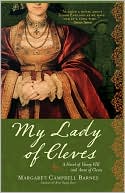
'My Lady of Cleves' - Book Review


I’ve read ‘My Lady of Cleves’ last year and I enjoyed this book a lot. Maybe it’s because the book shows a lot more of who Anne of Cleves was instead of the widely known ‘Flanders Mare’ and the ugly, stinky, badly dressed German woman that Henry VIII disliked.
Anne of Cleves was dependent on her brother William and their mother. She would help her brother William during state affairs and she had a very caring nature by helping the less fortunate. Even their mother thought it would be better for the youngest daughter, Amelia, to go to England since she couldn’t spare Anne. Despite Anne having pockmarks, Hans painted a beautiful miniature of Anne (the artist in him seeing a person’s soul).  There are references of her not speaking good English and that she is simple minded, which is a common theme in other historical fiction novels that I’ve read.
In this book, you also see a different side of Henry VIII. In the beginning, he wasn’t too keen on getting married a fourth time, especially with a foreigner. He’s pretty content to just be a widower. He’s a doting, concerned dad when it comes to Prince Edward. Then there’s the romantic side of Henry VIII when he looks at Anne’s miniature. He also missed his younger sister, Mary Tudor, which would lead him wanting a sister-like figure. Throughout the book, Charles Brandon tells Anne of Cleves that there is a different side of Henry VIII that is rarely seen.
The theme that remains between Henry VIII and Anne of Cleves was that meeting in Rochester. If only she was told beforehand that Henry VIII loved to dress in costumes, maybe that meeting wouldn’t have been so disastrous.  In Margaret Campbell Barnes’s retelling of that disastrous meeting, Anne of Cleves was in disarray thanks to the works of the Duchess of Norfolk (Katherine Howard’s grandmother) and Lady Rochfort (George Boleyn’s wife). I guess it makes the scene set that the Howard clan wanted to get rid of the woman that Cromwell wanted in order to get another Howard girl on the throne.
Anne of Cleves tried to go through every little detail in her head after that disastrous meeting in Rochester. It must have been a surprise when Archbishop Cranmer visited her at Hampton to convince her to keep the king’s interest. You couldn’t really blame the poor woman. She was unable to come up with clever responses because either of lack of English words or the English words is lost at the tip of her tongue. She truly tried her hardest in a whole new country. Then the humiliating scene with King Henry VIII coming to Hampton with Katherine Howard in tow, just makes things worse for Anne.
There were some good points in the marriage. When Anne of Cleves finally meets little prince Edward, she was able to calm his temper so that he was able to tell what was wrong and be able to play with his father and siblings. Anne has that gentle, motherly nature, which she shows Henry VIII and maybe in that brief moment, they acted like a married couple. Still, Henry VIII still wanted Katherine Howard and eventually the divorce proceedings will happen.
Despite the humiliating fact that Henry VIII wanted to divorce her and even had a statement during a meeting with his council, Anne of Cleves found it would be better for her to be the much beloved sister of Henry VIII. Anything is better than having your head cut off. Technically, Anne of Cleves isn’t totally free because she is unable to go home or to remarry. Still, she would be given properties, allowance and have the children (Mary, Elizabeth and Edward) to visit her.
During her time as sister to the King, she is beloved by many people. On one side, there are the people in the Protestant party would still believe her to be their rightful queen. On the other, there are Henry VIII’s friends who are now more appreciated of Anne. It was an interesting sight to see Henry VIII come to her house at Richmond and finally see what an extraordinary person that Anne was. He might have wondered why he never saw this before when they were married. Henry VIII would eventually open up to Anne as if she was really his natural sister.
 It’s also funny how she would get back at him for being such a bad person to humiliate her. For example, when she was ill and stayed in her bed, there were rumors spreading that she had born the king a son. She thought that it would be fun to just stay in bed to make Henry VIII guessing.
Towards the end, Anne has a better understanding of Henry VIII and would know how to handle him. During Queen Katherine Howard’s downfall, there was a possibility of Anne becoming queen once again. It was tempting and they had a better relationship now but watching little Katherine Howard making her way to the Tower, Anne knew that it wasn’t worth becoming queen again. I believe that she was right to think that way. Even so, she didn’t much care for Katherine Parr to be queen either, mainly because she can do the household things like Anne can do but also, Katherine Parr will have Henry VIII’s children.
In Margaret Campbell Barnes’s story, Hans Holbien would love Anne and vice versa but of course that can go nowhere. There are times in Anne’s story that she wished she could have been a wanton woman before marrying Henry VIII. Also, her dreams of having children would never be fulfilled. Now that she had her own estates, allowances as sister of the king, the children of the orphanages, she is a well off lady and the children of the orphanages are her babies. The transformation in Anne of Cleves is remarkable.
She would watch friends come and go. She would love her life out in the country and that is probably the best place for Anne of Cleves. At the very end of her story, she would help the great King Henry VIII come to terms with his pending death. I love the ending where she thought that he was making up for having called her a Flanders Mare.
I thoroughly enjoyed reading this book for the second time. Anne of Cleves would have been someone I would get along with and open up to, knowing that she would keep any secret that I tell her. If Anne of Cleves was truly the way that Margaret Campbell Barnes made her in this story, then I would agree with Cromwell when he said that it was England’s lost to lose such a wonderful woman.

Sunday, July 1, 2012

'At The King's Pleasure' - Book Review

‘At the King’s Pleasure’ is the fourth book in Kate Emerson’s Secrets of the Tudor Court series. I’ve read the previously three books and I’ve enjoyed reading each one. Kate Emerson focuses on the different women who are at the Tudor court so you are introduced into their personal stories as well as their life in the Tudor court. I’m also so absorbed in the book, which makes Kate Emerson a wonderful story teller for historical fiction. Also included in back of the novel are the real people’s mini biographies.
The main character in Kate Emerson’s latest novel is Lady Anne Stafford. If you are not quite sure who she was, Anne Stafford was the woman that Henry VIII kind of had his eye on as a possible mistress but once her brother learned about a possible affair, she was sent to the nunnery right away. Other than that little tidbit, I didn’t know too much about Lady Anne Stafford. Her story takes place during the early part of King Henry VIII’s reign when he was married to Queen Katherine of Aragon to a few years after the Field of Cloth of Gold.
Even though this is Lady Anne Stafford’s story, Will Compton, George Hastings and the Duke of Buckingham are frequently in the novel.
·         Will Compton was one of Henry VIII’s closest friends and was elevated as Groom of the Stool as Henry VIII came on the throne. It was quite possible that there was something going on between Will and Anne as the novel suggests. Still, even if he wanted to marry her, he was below her station (Anne was the daughter of a duke and he was a commoner not yet knighted).
·         George Hastings was Anne’s second husband. It would seem that they had a mutual attraction to one another as well. Jealousy and mistrust would later plague his relationship with Anne Stafford but through time, they would find love. It would seem that they had a good marriage overall.
·         Edward, Duke of Buckingham was Anne’s brother. He’s the hot headed brother who thinks he’s a good candidate to rule if Henry VIII doesn’t have any male issues. He is also the highest ranking duke in Henry VIII’s court and dislikes Henry VIII’s friends (ex. Charles Brandon and Will Compton). The Duke of Buckingham waits and schemes in the book and since I don’t like him, I’m hoping for a bad ending for him.
It’s basically a love triangle between Anne, George and Will. Will seems to be hopelessly in love with Anne but the two do enjoy the flirting that they exhibit at court. George, on the other hand, dislikes the whole display especially when he knows Will Compton’s nature.
Things heat up for Anne Stafford during the time of Queen Katherine’s second pregnancy. King Henry VIII thinks it is wise to leave pleasures aside with the queen. In doing so, he decides to have a mistress and he sets his eyes on Anne Stafford. Will Compton comes to Lady Anne’s room and she is appalled by the idea. Remember, Will Compton loved her and equally appalled at the idea of her being a royal mistress. Even though it looked like Lady Anne would be able to take care of how to handle the situation, her brother and their sister Elizabeth Fitzwalter supposedly ‘catches’ her with another man. Okay, maybe it was partly her fault since she was very flirtatious (but that’s the way things were at court) and Will Compton happened to be in her room. Lady Anne would get a rude awakening when her own husband does not come to her defense.  At dawn, she would be spirited away to a convent about 60 miles away.
During the time that Anne Stafford would stay at Littlemore priory, life is much more restricted, must follow the rules of the priory and the prioress was a very strict woman. During Anne’s stay, she befriends one of the nuns and learns a little secret of the prioress (Katherine Wells), which she will use later on in the story. After a month or so at Littlemore, George Hastings comes to bring back his wife to Ashby de la Zouch castle under conditions. This would be the place where Lady Anne will remain for the next five years before her being allowed to go back to court. During this time, they grow back into their mutual attraction to one another and Anne hopes that George will trust her again. Not like he had any reason to doubt in the beginning.
Even though Anne would eventually return to court, the love triangle continues: Will Compton being everywhere and in the same situation as Anne while George watches their actions like a hawk. Eventually, George will have to forgive Anne but he is still very wary about Will Compton. You would too with all the reasons he says about Will Compton. The life at court continues to go on especially now that Thomas Worsley gains more power and enemies. The Duke of Buckingham would listen to a prophet from Hinton and believing that Henry VIII would have no heirs from his body and that the Duke of Buckingham would be king. Well, we all know how wrong that prophet was! Still, the situation that the Duke of Buckingham would be in is categorized as high treason.
In the later chapters, you are given the scenes of the Field of Cloth of Gold between King Francis I of France and King Henry VIII of England. It must have been a spectacular affair with the tournaments and the many people on both sides and all the grandeur. Kate Emerson describes the Field of Cloth of Gold that made me feel like I was actually there with Anne Stafford. Still, Anne can hardly be excited during the festivities because of Lady Compton (Will’s wife) stirring trouble between Anne, George and Will.
Anne would learn the value of family once she learned that her brother is in serious trouble. She even tried to get Will Compton to help since he is close to King Henry VIII but he can’t help her.
Anne Stafford’s story is full of love, trust, betrayal and family value while living at the Tudor court. She must have been a beautiful wonderful woman, who was actually lucky to have a good marriage (despite George not trusting her for sometime). Kate Emerson gave me a different look at Anne Stafford because I’ve read other historical fiction novels that depict Anne Stafford as an adulterous wife. I’ve enjoyed reading ‘At the King’s Pleasure’ and I hope that this is enough to get you to read it too.

Sunday, June 17, 2012

'Rival to the Queen' - Book Review


What I do know about Lettice Knollys was that she had a few marriages and one was with Robert Dudley, Earl of Leicester. She had similar features like a younger Queen Elizabeth I so she could have been Elizabeth’s double gagger.  She was the daughter of Catherine Knollys, daughter of Mary Boleyn so Elizabeth and Letticia were actually cousins. She was banned from court when Elizabeth found out that she married Elizabeth’s favorite. She also had a wantonness behavior that attracted the men at court (other than her beauty).
When I noticed that Carolly Erickson wrote a historical fiction about Lettice, I couldn’t help ordering the book. In my previous blog, I read ‘I, Elizabeth’ so I guess it was fitting that my next book for the Tudor challenge would be about Lettice Knollys.
I do wonder if Lettice thought herself to be part of the royal family. In the early chapter, Lettice mentions that her mother told her that Catherine may have been rumored to be a child of King Henry VIII. It was definitely rumored that Catherine Carey could have been King Henry VIII’s natural daughter. Too bad we can’t do DNA testing to put that rumor to rest.
Some of the early chapters place Lettice in Flanders during the reign of Queen Mary I. You don’t have too many chapters specifically during this part of her life and you’ll be back in Tudor England when Queen Elizabeth I is on the throne. In this book, it seems that Catherine Knollys and Queen Elizabeth I were not exactly friends while in other books I’ve read, it seems that they were. True to Elizabeth’s character, Carolly Erickson displays that famous Tudor temper at the maids of honor. It was interesting to read from Lettice’s point of view of being a maid of honor for Elizabeth. I don’t think I could be able to handle the abuse that Elizabeth would bring when she’s upset. Lettice’s description of Elizabeth is more of a woman with a temper, changes her mind too often and in love with Robert Dudley. After reading ‘I, Elizabeth’, I have a different view of Elizabeth as a lady and a Queen.
In the early days, she admires Robert Dudley especially when she was being courted by her first husband, Walter Devereux. Walter seemed more like a bore compared to Robert any day. Her admiring Robert would eventually become friends in the book.
There are some things that seem farfetched to me such as the story about Elizabeth not really having monthly bleedings and only using other people’s blood to disguise her barrenness. Especially during this timeframe, Elizabeth would have been in her late twenties. Still, with Elizabeth refusing to marry anyone, it would be an interesting rumor. Another farfetched scene was Elizabeth wanting bed curtains that once belonged to Amy Robsart to decorate Elizabeth’s room. Again, an interesting rumor to spread since it was widely known that Elizabeth favored Robert and there were already rumors that he would marry the queen or already has married Elizabeth.
An interesting view that I’ve never read so far is about the inquest about the sudden death of Amy Robsart. Lettice tells about the witness’s accounts up to that deadly afternoon from the doctor to Amy’s servant Pirto.  It gives the reader an idea of the inquest and how they came to their conclusion. Also her account during the time Elizabeth was feared to die from the pox and leaving England in the hands of Robert Dudley.  As to him having a priest to marry them at her so called death bed seems farfetched as well but a good reason for her to claim him as Lord Protector if she passed away. It’s these types of historical fiction I like to read when it’s in another person’s view point at court, even though the author places the character in their story when historically, that character may not have been there. Through all these places that the author places Lettice, Lettice continues to grow fond of Robert Dudley while despising Walter Devereux. There is also her account of the bear baiting, which was very barbaric. However for people that loved blood sports back in those days, this was their entertainment.
Carolly Erickson gives the impression that Lettice wasn’t as forward as other historical fiction books depict her. In her version, it’s only through a despised younger sister that her reputation is ruined. Even at the Tudor court, rumors are very powerful tools.
During her marriage, Lettice proved to be fertile (even though it was only daughters early in their marriage) and learned how to manage her husband’s estates. However, eventually Lord Robert would take notice of Lettice even if it was just to make the queen jealous. Still, this short love affair was wonderful for Lettice since her marriage to Walter made her very unhappy and her secret dreams revolved around Robert Dudley.  Undoubtedly, she would love Robert but there is always that nagging feeling that there was more to him then she already knew. Eventually, Lettice will bring Robert Devereux into the world. Remember his name later because he will become one of Elizabeth’s favorite in the later years of her reign.
The passage of time goes quickly in this book. One minute, the queen is in her late twenties and the next, the queen is in her forties. By the time that Elizabeth is nearing forty, Lettice and Robert have grown fond of one another, which as Lettice saw it, loved one another. It’s interesting to see a different side of Robert like how he referred Elizabeth as a ‘sour, hateful old thing’ to Lettice. You would think that Robert Dudley truly loved the queen since historically those two are linked.
After her first husband died, not sure of how much time had passed before Robert and Lettice were married. I assumed it’s after a year or two of mourning since that was the tradition. It’s at this time that Lettice acknowledges that she was Elizabeth’s rival and begins her banishment from Elizabeth’s court. Lettice will get the nickname She-Wolf. Still, Lettice doesn’t cower at Elizabeth’s fury because by this time she understood why Elizabeth hated her.
It seems that Lettice had a good marriage with Robert Dudley (much to my surprise). By this time, Lettice is in her forties and has given Robert the son he looked for. Robert no longer in disgrace is back at court with Queen Elizabeth I while Lettice is still out in the country. Still, Elizabeth would make sure that Robert was still at her side but Lettice, being a good wife, tried not to complain. Despite his love for his queen, it seemed like Robert was actually a very devoted husband (another surprise since he wasn’t as devoted with his first wife Amy Robsart).
This is the second book that I encountered None Such Palace. Not enough description as in ‘I, Elizabeth’ but just a brief mention. I was grief stricken at the lost of Lettice’s son with Robert Dudley who was only three years old. As a mother, I don’t know how I would be able to go on if I lost my little guy. Dashed are Robert’s dreams of having a son to carry the Dudley name.
The later chapters told about Elizabeth’s later years of her reign with the war against Spain, Robert Dudley in the Dutch provinces and famine. You are also introduced to Christopher Blount, who in time would be Lettice’s third and last husband. What a scandal that might have been since Chris was a much younger husband. Her son, Robert Devereux, is an interesting character and a big upstart. He seemed to truly believe as Elizabeth’s favorite and ‘royalty’ (thanks to Lettice’s blood), he was the ideal choice to rule England. As to why Elizabeth favored him, only she would know. Lettice was right to worry about her son. Thanks to her son, Lettice returns to court as Mother of the Maids but an underlying reason from Elizabeth is the true reason Lettice is able to return to court.
The story ends when Lettice says good-bye to her only son, Robert Devereux. At the epilogue, Lettice is in her nineties. She had an extraordinary life, full of dreams, love and heartache. Thanks to Carolly Erickson, I have a different view of Lettice Knollys. To me, she was just an ordinary girl (possibly had royal blood), trying to make her way at the Tudor court. Lettice was a good daughter to her parents Francis and Catherine Knollys even though she was overly criticized by her father. Despite rumors of her wantonness, she married first by her father’s match then married for love twice. She was just as hot headed as her cousin Elizabeth but she was also cautious. Lettice is a much more relatable character than what other historical fiction books portray her.